China Urea Market Update — October 2026, Week 1
How the China urea export market is structured this week: the quota position, the floating export floor, what our own loading programme shows, and the five things buyers should watch next.
Market Snapshot
- Date
- 1 October 2026
- China domestic
- Being compiled — not published until verified
- China export (FOB)
- Being compiled — not published until verified
- International reference
- Being compiled — not published until verified
- Key driver this week
- Quota allocation and inspection scheduling rather than outright demand
- China export situation
- Export quota administered; inspection required before shipment
- Buyer watch
- Freight, quota release timing, and the FOB/CFR spread in your destination market
What actually sets the China export price
A China urea export price is not one number. It is the result of a domestic mill price, a quota entitlement, an inspection requirement, a freight component and a payment-terms discount, each moving on its own clock.
Because the export floor moved from a fixed figure to a formula linked to China’s own recent average export price, the floor now tracks the market with a lag. In practice that means the floor bites hardest exactly when the international market has just fallen — the moment a buyer most expects a quick discount.
This is why a quotation from a Chinese exporter and a published index number rarely match on the same day. They are measuring different things at different points in the chain.
Source / market reference: Owner briefing, 2026
Domestic China
Domestic levels and export levels move on separate logic. Domestic pricing responds to domestic agricultural seasonality, industrial demand from resin, melamine and denitration users, and plant maintenance schedules. Export pricing adds quota scarcity and inspection timing on top.
For buyers, the practical consequence is that a domestic Chinese price is not a proxy for what you will pay FOB. Watching it is still useful — it tells you what the mill is giving up by selling to you instead of to the home market.
Verified domestic levels for this week are still being compiled by our market team and will be loaded into the price data file, with the date and source attached, once confirmed.
Prilled and granular — two different conversations
Prilled and granular urea are both 46% N, but they are not interchangeable in a buyer’s process. Granular is engineered for mechanical spreading and NPK blending: larger, harder particles, less dust, better size matching with DAP and potash.
That difference shows up in the market as separate supply and separate pricing. A granular buyer comparing a quotation against a prilled index is not comparing like with like.
Our own programme reflects this — the handling, bagging and loading practice is shared across automotive grade, agricultural prilled and agricultural granular, because the packaging formats are the same.
International picture
International urea markets are read here from published market reporting and from what our own buyers tell us in live enquiries. We summarise the direction and the drivers in our own words; we do not reproduce third-party price tables or long extracts.
The markets that matter for a China-origin cargo are usually the Middle East for a competitive FOB reference, Brazil for CFR demand pull, India for tender timing, Europe for the Egypt/Algeria supply balance, and the US Gulf as a sentiment marker.
Each of those sits on a different trade condition. Middle East is quoted FOB, Brazil CFR, India on tender awards, the US Gulf in short tons. A single comparison table across all five would be misleading, so we do not build one.
Source / market reference: Third-party market reports, summarised
Export supply and shipping
Container availability out of Qingdao and the wider Shandong port cluster drives landing cost more than most buyers expect, and it moves independently of the urea price itself.
Our current loading programme runs mainly in containers for bagged cargo in the 100–1,000 MT range, with bulk vessel coordination for larger contracts. Free time, container condition and door-end bracing are the practical variables that decide whether cargo arrives free-flowing.
What buyers should watch
Watch quota release timing rather than headlines — supply becomes available in steps, not smoothly.
Watch the FOB/CFR spread in your own market, not a global headline price. The gap is where your real cost sits.
Watch inspection scheduling. It sets the realistic loading window, and a missed window costs more than a few dollars per tonne.
Ask for a validity period on every quotation. Urea offers are tied to a date for a reason.
The Cargo Behind the Commentary
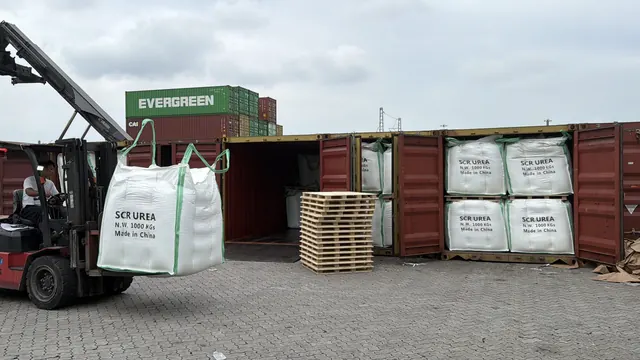
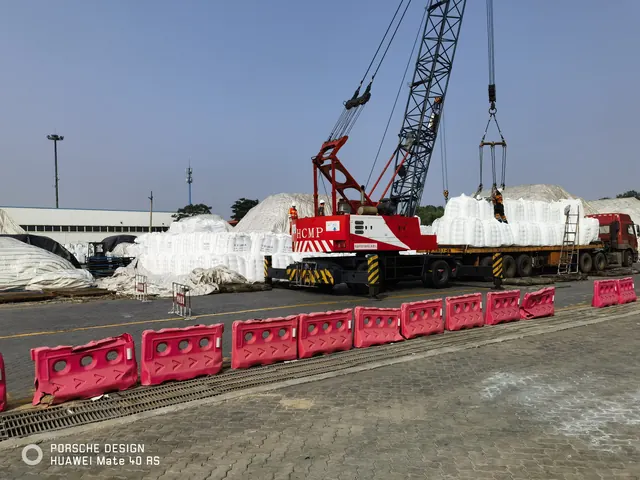
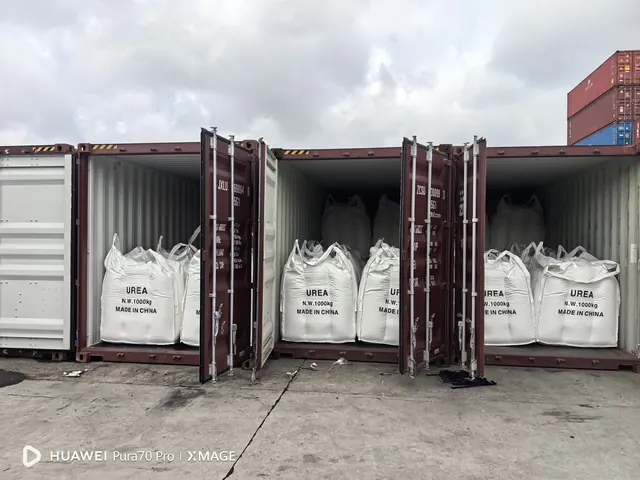
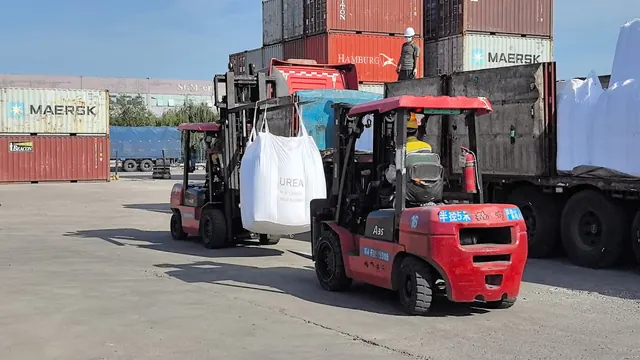
See also: Urea Export by Container , Bulk Urea Export by Vessel , Automotive Grade Urea Export by Container , 50 kg Bag Urea Export , 500 kg Bag Urea Export , Prilled Urea Export by Bulk Vessel .
This article was published on 1 October 2026 and last updated on 1 October 2026. Historical market articles are retained as published and are not rewritten when the market moves.
Need current urea price?
Send product, quantity, destination port and packaging — you will get a quotation tied to a stated validity period.